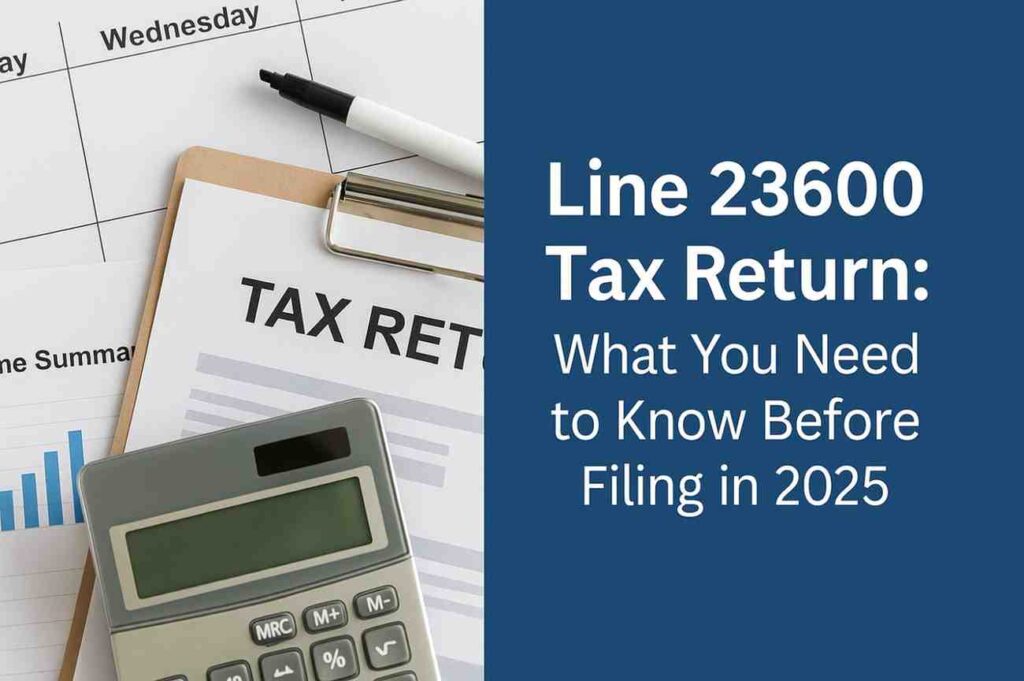
Line 23600 on Your Tax Return: What You Need to Know Before Filing in 2025
Filing taxes in Canada can feel overwhelming, especially when different lines on your return affect credits, benefits, and even RRSP contribution limits. One line that often causes confusion is line 23600 tax return. If you’re preparing to file your 2025 taxes, understanding what this line means, how it affects you, and which mistakes to avoid will help you file with confidence.
In this guide, we’ll break down everything you need to know about line 23600, using simple language, clear examples, and practical tips. By the end, you’ll see why paying attention to this line is so important for individuals and businesses in Canada.
What Is Line 23600 on a Tax Return?
Before diving into strategies, let’s start with the basics. Line 23600 tax return represents your net income. This figure is not your total earnings but rather what remains after you subtract allowable deductions from your total income.
Net income is important because it forms the basis for many other calculations in your tax return. It’s used by the Canada Revenue Agency (CRA) to determine eligibility for federal and provincial benefits, credits, and even repayment obligations for certain programs.
To put it simply:
- Total income (Line 15000): This is the sum of all your income sources before deductions.
- Net income (Line 23600): This is your income after deductions like RRSP contributions, union dues, moving expenses, and child care costs.
- Taxable income (Line 26000): This is the income left after further deductions that you’ll actually pay tax on.
So, line 23600 sits at the heart of your tax return because it bridges the gap between your gross income and your taxable income.
Why Line 23600 Matters in 2025
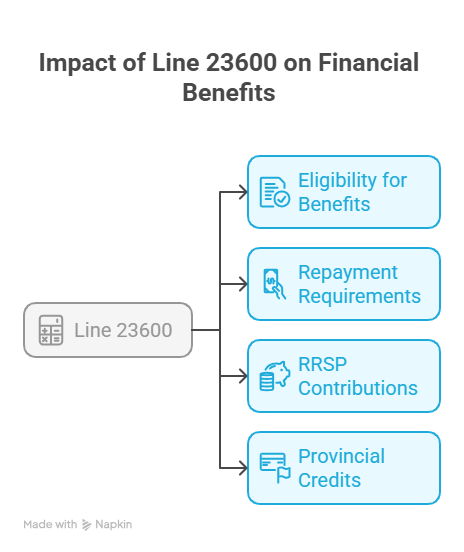
Now that you understand what this line represents, let’s discuss why it matters so much for your 2025 filing. The CRA uses line 23600 as a benchmark for many calculations, so reporting it correctly can directly affect your finances throughout the year.
Here’s why it’s important:
- Eligibility for benefits: Programs like the GST/HST credit and the Canada Child Benefit are calculated based on net income.
- Repayment requirements: If you received Employment Insurance (EI) or COVID-related benefits in earlier years, your net income might determine whether you need to repay a portion.
- RRSP contributions: Your deduction limit for RRSP contributions is tied to your earned income, which affects line 23600.
- Provincial credits: Many provincial programs, from drug benefits to housing credits, rely on net income.
When filing your 2025 return, remember that even a small miscalculation on line 23600 could reduce your benefits or increase your tax liability.
After understanding why line 23600 matters, the next logical step is to understand how you can accurately calculate your net income.
How to Calculate Line 23600
Understanding the calculation is key to avoiding errors. While tax software does most of the math, it helps to know what’s included.
Your line 23600 tax return amount is calculated as:
Total income (Line 15000) – Allowable deductions = Net income (Line 23600)
Common deductions that affect line 23600 include:
- RRSP contributions – Claiming contributions reduces your net income.
- Union or professional dues – Deducted from employment income.
- Child care expenses – Help families lower their net income.
- Moving expenses – Eligible if you moved at least 40 km closer to work or school.
- Support payments made – Court-ordered payments may be deducted.
- Carrying charges and interest expenses – Investment-related deductions.
Example:
If your total income (Line 15000) is $65,000 and you claim $8,000 in RRSP contributions, $2,000 in union dues, and $3,000 in child care expenses, your line 23600 would be:
$65,000 – ($8,000 + $2,000 + $3,000) = $52,000
This net income is what will appear on line 23600.
Once you understand how to calculate your net income, it’s important to see how line 23600 directly affects your government benefits.
How Line 23600 Affects Benefits and Credits
Now that you know how it’s calculated, let’s explore how line 23600 impacts government benefits and tax credits. This is where the number really starts to matter.
- Canada Child Benefit (CCB): The CRA uses family net income from line 23600 to determine how much families receive. Higher net income generally means reduced benefits.
- GST/HST Credit: Your eligibility and payment amounts depend directly on your net income.
- Old Age Security (OAS) Recovery Tax: If your net income exceeds the threshold, you may need to repay part of your OAS benefits.
- Working Income Tax Benefit (Canada Workers Benefit): Net income affects whether you qualify and how much you receive.
- Provincial programs: From drug coverage to energy rebates, provinces use line 23600 as a benchmark.
In short, the amount on line 23600 doesn’t just affect your taxes; it can influence how much financial support you and your family receive all year.
Even though the calculations seem straightforward, many Canadians still make errors on this line, leading to reduced benefits or higher taxes.
Common Mistakes People Make with Line 23600
Transitioning from understanding to action, it’s important to know what errors to avoid. Many Canadians make simple mistakes on this line that end up costing them.
Frequent errors include:
- Not claiming all deductions: Forgetting RRSPs, union dues, or moving expenses can inflate your net income.
- Confusing total income and net income: Mixing up line 15000 and line 23600 leads to reporting errors.
- Overlooking child care expenses: Parents often miss these deductions, especially if shared between partners.
- Ignoring professional advice: Filing on your own can increase errors if your finances are complex.
- Relying solely on benefits: Assuming you’ll get full credits without understanding how net income impacts them.
Avoiding these mistakes ensures your line 23600 accurately reflects your financial situation.
After covering mistakes to avoid, it’s time to look at what to watch for in 2025 that might affect line 23600.
Updates to Watch for in 2025
Tax laws evolve every year, and 2025 is no exception. While the fundamentals of line 23600 remain the same, there may be adjustments to thresholds, deductions, and benefits.
Here’s what you should keep in mind:
- Indexation of benefits: Many credits and thresholds increase with inflation, meaning the effect of your net income may shift slightly.
- Changes to provincial programs: Each province may adjust eligibility rules that rely on net income.
- RRSP and TFSA limits: Keep track of contribution limits, as they directly affect deductions impacting line 23600.
- Government reporting changes: Watch for CRA updates regarding digital filing or pre-filled returns.
Keeping up with these updates helps you file accurately and maximize your return.
While we’ve focused on individuals so far, let’s now shift to how businesses and self-employed taxpayers should approach line 23600.
How Businesses and Self-Employed Individuals Should Handle Line 23600
So far, we’ve focused on individuals, but what if you’re self-employed or running a small business? Line 23600 matters just as much, sometimes even more so.
Here’s why:
- Business deductions: Expenses like home office costs, vehicle expenses, and supplies all affect your net income.
- Impact on benefits: Higher reported net income may reduce your family’s benefits.
- CPP contributions: Your self-employed income drives Canada Pension Plan contribution amounts.
- RRSP room: More business income means higher RRSP contribution limits, which can lower net income.
If you’re self-employed, careful bookkeeping ensures accuracy in calculating line 23600. That’s where working with a CPA firm like One Accounting can make all the difference.
With both individual and business implications covered, let’s move on to practical tips that can make tax filing much easier in 2025.
Tips to Make Filing Easier
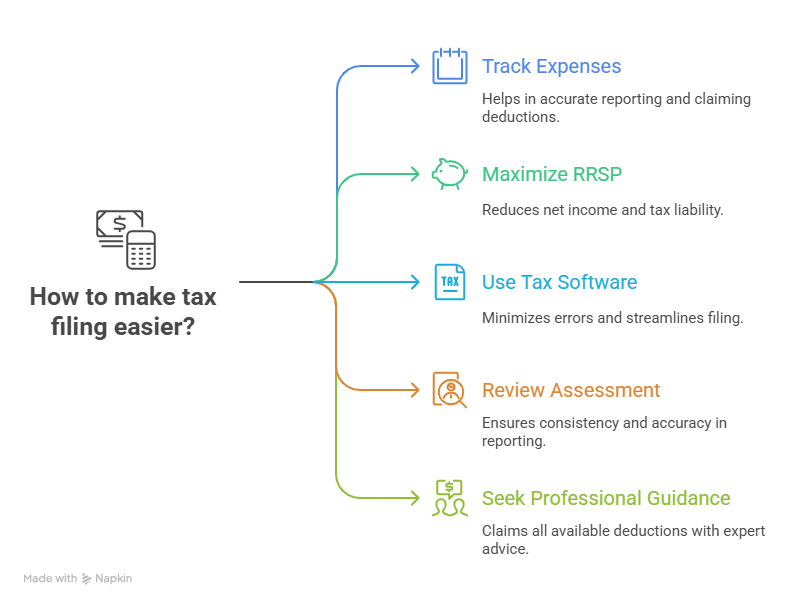
By now, you know line 23600 is more than just a number. To make your filing easier in 2025, keep these practical tips in mind:
- Track expenses year-round – Don’t wait until tax season to collect receipts.
- Maximize RRSP contributions – Use them strategically to reduce net income.
- Use reliable tax software – It helps reduce human error.
- Review your Notice of Assessment – Make sure line 23600 matches what you reported.
- Seek professional guidance – A CPA can help you claim every deduction available.
Conclusion
Understanding the line 23600 tax return is one of the most important steps you can take before filing in 2025. This number doesn’t just determine your taxable income; it influences your eligibility for benefits, credits, and future financial planning opportunities.
By learning what line 23600 represents, how it’s calculated, and the mistakes to avoid, you can take control of your tax return with confidence.
Share:
Recent Blogs
GST/HST Credit Payment Dates in Canada
Canada Tax Deadline 2025: 10 Last-Minute Reminders
Eligibility Criteria for Carbon Tax Rebates: What You Need to Know
5 Ways a Tax Accountant in Calgary Can Help You Save Money
The Ministry of Finance Automated the Tax Compliance Verification (TCV)
Understanding the Advanced Canada Workers Benefit (ACWB) 2024
A Guide to Understanding the Ontario Trillium Benefit (OTB)
What Is Line 15000 On Tax Return?
What is Line 10100 on your tax return in Canada?
What is a T5 Slip? A Comprehensive Guide
Do you qualify for automatic free tax filing by the CRA?
Moving Expenses On Taxes: What Can Be Claimed?
Disclaimer: Information shared in this blog is general in nature and may not apply to all situations or circumstances. Contact One Accounting for accurate, professional advice.

Leya Koshy
CA — Accounting Director, One Accounting
Leya Koshy is a Chartered Accountant (CA) and the Accounting Director at One Accounting. With a strong foundation in accounting principles and Canadian tax regulations, Leya leads the accounting operations at the firm with precision and professionalism. She plays a key role in delivering accurate financial reporting, corporate compliance, and client advisory services across the firm's diverse client base. Her commitment to excellence and detail-oriented approach ensures that clients receive the highest standard of accounting support, helping businesses maintain financial clarity and confidence.
- Phone: +1 416-278-1283
- Email: leya@oneaccounting.cpa
